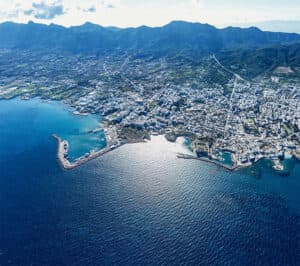
Geopolitical Advantages of North Cyprus Property Investment: A Strategic Guide

In a shifting global economy, capital allocators continuously seek alternative jurisdictions that isolate wealth from regulatory overreach, high tax burdens, and localized volatility. For decades, traditional Mediterranean real estate markets in Spain, Greece, and Portugal served as the default choices for overseas capital. However, as those jurisdictions implement tighter capital controls, higher entry thresholds, and eliminate residency-by-investment programs, emerging alternative regions are commanding institutional focus.
The geopolitical advantages of North Cyprus property investment have increasingly positioned this unique market as a strategic haven for sophisticated international buyers. Operating outside standard European Union regulatory structures yet physically and economically connected to major regional hubs, the Turkish Republic of Northern Cyprus (TRNC) offers a distinct investment profile. By combining property acquisitions with structural sovereign protections, alternative currency hedges, and favorable local tax frameworks, investors can secure stable value.
Consider the scenario of a European family office redirecting capital from Spain’s phasing-out Golden Visa program toward the Esentepe coastal corridor in North Cyprus. By acquiring premium seafront developments, they bypass the high entry barriers of the Western Mediterranean while capturing a market characterized by strict density limits and consistent rental returns. Understanding the forces behind this market is essential for any buyer looking to navigate the Mediterranean property environment in 2026. For a complete overview of the purchase process, read our buy property in North Cyprus as a foreigner guide.
The Mediterranean Crossroads: Geostrategic Positioning of North Cyprus
Northern Cyprus sits at a crucial geographic intersection where Europe, Türkiye, and the Middle East meet. This positioning is not merely a geographic detail; it is a structural driver of the island’s long-term economic, educational, and logistical value. As a central link in the Eastern Mediterranean maritime and aviation networks, the island has historically functioned as a point of interest for international trade and capital flow.
The geopolitical importance of this location has been highlighted by recent hydrocarbon discoveries in the Levantine Basin. The offshore natural gas reserves surrounding the island have focused international attention on Cyprus as an emerging energy hub. These regional energy dynamics encourage long-term infrastructure investment by major regional powers, which supports general asset values across the island over time.
For real estate investors, this strategic positioning ensures that the region remains a focal point for regional tourism, commercial shipping, and international higher education. Rather than relying on a single source of local demand, property markets in Kyrenia and Esentepe benefit from a diversified base of European, Turkish, and Middle Eastern visitors. To understand how location selection influences your returns, refer to our analysis on the best places to invest in North Cyprus property.
The Price Gap Arbitrage: North Cyprus vs. Southern Cyprus
The financial logic of North Cyprus real estate is anchored by a significant valuation gap between the northern and southern parts of the island. Although both regions share the same Mediterranean climate, coastlines, and general geography, their property pricing operates on different levels. The Southern market (Republic of Cyprus) commands mature EU-level valuations, whereas the Northern market remains priced as a frontier territory.
As of mid-2026, the average residential property price in Southern Cyprus is approximately €2,600 per square meter, with prime beachfront projects in Limassol and Paphos frequently reaching between €3,500 and €5,000+ per square meter. In contrast, premium coastal properties in Northern Cyprus, particularly in Esentepe and Tatlısu, average between £2,000 and £3,000 per square meter. This represents a price gap of 40% to 70% for equivalent construction quality and coastal proximity.
| Region / Market | Average Price per Sqm (2026) | Minimum Residency Entry Threshold | Primary Valuation Status |
|---|---|---|---|
| North Cyprus (Coastal) | £2,000 – £3,000 | ~£100,000 – £150,000 | Frontier / Undervalued |
| South Cyprus (Republic) | €3,600 – €7,000+ | €300,000 (Fast Track) | Mature / EU Integrated |
| Spain (Coastal Hubs) | €3,500 – €5,500+ | N/A (Golden Visa Terminating) | Highly Regulated |
| Greece (Prime Zones) | €3,000 – €6,000+ | €800,000 (Golden Visa) | High-Barrier Entry |
This pricing differential offers a clear arbitrage opportunity. Buyers can secure premium seafront penthouses or detached villas at entry points that have disappeared from the rest of the Mediterranean. Additionally, because the acquisition costs and ongoing maintenance fees in the North are structurally lower, the net yield calculations often surpass those of mature EU markets. You can review detailed tax calculations using the North Cyprus property tax guide.
Security and Economic Depth: The Strategic Role of Türkiye
A common question among international buyers concerns the political stability of an unrecognized state. In Northern Cyprus, this concern is addressed by the direct support and security guarantees provided by the Republic of Türkiye. Rather than operating as an isolated island economy, the TRNC is backed by Türkiye’s military, financial, and infrastructural systems.
This relationship provides physical security and underwrites significant utility infrastructure projects that enhance the quality of life and land value. The most notable example is the TRNC Water Supply Project, which pumps 75 million cubic meters of fresh water annually from Anamur, Turkey, through an undersea pipeline directly to the Geçitköy reservoir. This engineering feat secures the island’s water supply, supporting agriculture, residential consumption, and development sustainability.
Furthermore, plans are underway for an undersea electricity cable designed to connect the TRNC power grid directly to the Turkish National Grid, stabilizing energy distribution. Combined with the major expansion of Ercan Airport, which can now accommodate larger aircraft and handle millions of passengers annually, Northern Cyprus benefits from physical connections that protect the territory from utility and economic isolation. For strategic projects, these utility guarantees support the long-term viability of beachfront projects like the Malibu coastal apartments.
Risk Mitigation: The UN Buffer Zone Presence
The presence of the United Nations Peacekeeping Force in Cyprus (UNFICYP) is a crucial, yet under-analyzed, risk mitigator for real estate investors. Since 1964, the UN has maintained a 180-kilometer-long buffer zone that separates the northern and southern parts of the island. This continuous monitoring and patrolling act as a stabilizing mechanism, keeping the island peaceful and secure.
UNFICYP’s mandate focuses on maintaining the military status quo, monitoring ceasefire lines, and acting as a neutral liaison between both sides. Day-to-day issues, such as agricultural border disputes or infrastructure maintenance within the buffer zone, are resolved through UN diplomatic channels rather than escalation. This active oversight prevents localized incidents from turning into wider security problems.
For property buyers, the UN presence minimizes the probability of uncontrolled conflict. The buffer zone acts as a physical and diplomatic insulator, ensuring that the division of the island remains stable and managed. This security, combined with low crime rates, allows international buyers to invest with confidence, knowing their assets are located in a highly stable regional pocket.
The Optionality Play: Reunification and Settlement Scenarios
From an investment perspective, the political status of North Cyprus functions as an asymmetric optionality play. Buying real estate in the TRNC is, in effect, acquiring an undervalued asset that holds a long-term “call option” on political normalization or a formal federal settlement.
If the two sides of the island reach a comprehensive political settlement or achieve formal recognition of the North’s status, the valuation gap would close rapidly. Northern property prices would adjust upward to align with the higher values in Southern Cyprus and the European Union. An investor who acquired land or coastal residences at $1,000 per square meter would capture significant capital appreciation as the market integrated into the mainstream European sector.
Importantly, this optionality is backed by a legal framework for property claims. The Immovable Property Commission (IPC), established in accordance with the rulings of the European Court of Human Rights (ECHR), provides a recognized path to address pre-1974 property claims through exchange, compensation, or restitution. This ECHR-sanctioned mechanism protects investor interests by offering a legal way to resolve historical land claims, ensuring that TRNC-issued titles are legally insulated from arbitrary challenges. To review how historical growth aligns with future projections, read our North Cyprus property investment guide.
Green Line Connectivity: Gateway to the EU Economy
Although the TRNC operates outside direct EU administration, it is not economically isolated from the Southern EU market. The Green Line Regulation, established by the European Union in 2004, provides a legal framework for the movement of goods, services, and people across the division line.
In 2025, human mobility across the Green Line reached a historic high of 7.79 million authorized crossings, demonstrating high daily interaction between the two communities. Economically, north-to-south trade under the regulation reached €14.43 million, covering construction materials, furniture, and plastic products. Furthermore, the EU supports local businesses by helping them meet EU sanitary standards, enabling products like Halloumi/Hellim to access European markets.
This connectivity means that residents and property owners in the North are not isolated. EU passport holders can cross border checkpoints within minutes, utilizing Southern infrastructure, such as Larnaca International Airport, hospitals, and shopping centers, while living in the lower-cost North. This connectivity reduces the practical barriers of the political division, offering the benefits of EU proximity alongside the cost advantages of the North.
Limited Coastal Land and Low-Rise Zoning Scarcity
While geopolitical borders define regional values, local zoning laws protect them. In North Cyprus, the planning authorities have implemented strict low-density regulations in premium coastal corridors like Esentepe and Bahçeli. These guidelines restrict construction to a maximum of two floors and limit building density to approximately 35% of the parcel.
This low-rise zoning policy is a strategic asset preservation tool. By preventing the high-rise, high-density concrete developments seen in other Mediterranean resort areas, the regulations preserve the natural coastal landscape and prevent over-development. Investors are assured that their sea and mountain views are protected from being blocked by future projects.
Furthermore, the local geography, where the Kyrenia mountain range runs parallel to the Mediterranean Sea, limits the physical land available for development. This mountain-to-sea corridor creates a natural constraint on supply. When this geographical limit is combined with low-density planning rules, the result is a structural scarcity of premium seafront real estate. Over the long term, this scarcity supports property values by ensuring demand consistently outpaces supply, as seen in projects like the Poseidon seafront apartments or the ready-to-move completed seafront units.
The Sovereignty Buffer: Asset Protection Outside the EU
The TRNC operates outside the direct jurisdiction of the European Union, which provides a valuable financial benefit for international wealth management. Because the local banking system is not integrated into standard EU automatic sharing networks, the region functions as a sovereignty buffer for asset diversification.
This independence shields capital from EU capital controls, wealth taxes, and sudden regulatory changes. For high-net-worth individuals, North Cyprus real estate offers a tangible, non-correlated asset class that sits outside standard Western banking channels, providing a layer of privacy and capital security.
Additionally, this structure supports a highly favorable currency arbitrage:
- GBP Capital Protection: Real estate acquisitions, valuations, and rental contracts are denominated in British Pounds (GBP). This safeguards the investor’s core capital and income stream against local inflation.
- TRY Operational Arbitrage: Day-to-day property maintenance, local management fees, utilities, and living costs are paid in Turkish Lira (TRY). Since the TRY has a favorable exchange rate against the Pound, investors can run their properties with low overhead, improving their net rental returns.
You can calculate these currency and return spreads directly using the North Cyprus ROI Calculator to see how the GBP/TRY spread improves net yields.
The May 2026 Decree: Market Institutionalization
The regulatory environment in Northern Cyprus took a significant step forward with the property decree published in the TRNC Official Gazette on 11 May 2026. This updated framework introduces stricter controls on foreign property ownership, signaling a shift toward a more mature, institutionalized market.
Key provisions of the TRNC property decree May 2026 include:
- 80% Project Cap: Foreign ownership is limited to a maximum of 80% of units within any residential housing development. The remaining 20% must be held by local buyers, promoting integrated communities and reducing reliance on single foreign buyer segments.
- Nationality Distribution Quotas: No single nationality group or connected ownership cluster may own more than 50% of the units within the same land parcel.
- The Licensed Intermediate Investor Model: A new, regulated path that allows corporate and portfolio investors to secure usage and benefit rights (up to 10 years) over properties without requiring direct individual title deeds, subject to security clearances and developer agreements.
For buyers, these changes emphasize the importance of working with established, reputable developers who understand local compliance. Carrington Group’s 30+ year track record and integrated local operations ensure that all construction permits, project quotas, and sales contract registrations comply with the post-May 2026 standards, protecting investor capital from regulatory friction. Explore our compliant, low-density developments on our projects page.
Frequently Asked Questions
What happens to my property in North Cyprus if the island reunifies?
In the event of a political settlement or reunification, property titles in the North are protected by the Immovable Property Commission (IPC) framework, which is recognized by the European Court of Human Rights. Normalization would likely involve financial compensation or land exchanges rather than the loss of property, while property values would rise to meet Southern Cyprus levels.
How easily can I cross from North Cyprus to the EU South?
EU passport holders and citizens of many international countries can cross the Green Line checkpoints within minutes. Routine crossings allow residents in the North to access Southern airports (Larnaca), hospitals, and retail hubs before returning to the lower-cost North.
Is property in North Cyprus priced in Turkish Lira or British Pounds?
North Cyprus real estate is priced, bought, and rented in British Pounds (GBP). This protects your capital investment from local currency fluctuations, while operational and day-to-day costs are paid in Turkish Lira (TRY), creating a favorable return spread.
What are the foreign buyer limits under the May 2026 decree?
Standard foreign buyers may purchase up to three apartments, or up to two villas, or land up to 1,338 square meters for a single residential build. Projects are also capped at an 80% maximum foreign buyer quota, making developer due diligence essential.
Actionable Checklist: Evaluating a Post-2026 Purchase
To ensure your investment benefits from these geopolitical advantages while minimizing regulatory risk, follow this checklist before committing capital:
- Verify the Project Quota: Confirm with your lawyer that the project has not exceeded the 80% foreign buyer cap set by the May 2026 decree.
- Review the Title Deed History: Ensure the property has a clean TRNC-registered Equivalent (Eşdeğer) title deed, which is protected under ECHR-sanctioned frameworks.
- Check Construction Permits: Confirm that the developer holds all valid building permits and planning approvals before signing off-plan contracts.
- Register the Contract: Ensure your sales contract is registered at the Land Registry within the legal timeframe (usually 21 days) to secure your legal claim.
- Analyze the Currency Spread: Estimate your rental income in GBP and your operating expenses in TRY to calculate your net yield accurately.
By combining the geostrategic position of the island, the pricing gap with the South, and the security of established developers, North Cyprus remains a compelling alternative for capital preservation. To discuss compliant investment options and review project specifications, contact the real estate advisory team at Carrington Group.