Healthcare in North Cyprus: Public, Private and Expat Options

Martin had already checked the title deed structure, school options, and driving rules before buying in North Cyprus. Then his wife asked the question that changes a relocation conversation fast: “If one of us needs a doctor next week, where do we actually go?” That is usually the point where glossy lifestyle guides stop being useful.
Healthcare in North Cyprus is workable, but it is not a copy of the NHS, and it is not a pure private-pay system either. There is a public network of state hospitals and health centers, a large private sector that many expats prefer for convenience, and a practical layer of insurance and residency planning that matters more than most newcomers expect.
This guide explains how the system works in real terms, what public and private care each do well, and what expats, retirees, and second-home owners should arrange before they need treatment.
If you have a serious ongoing condition, treat this article as a planning guide rather than medical or legal advice. Verify hospital capability, insurer acceptance, and residency requirements directly before you move.
If healthcare is one part of a wider relocation decision, our complete North Cyprus guide gives the broader picture on living standards, safety, and long-term practicality.
How healthcare in North Cyprus is structured for residents
The first thing to understand is that North Cyprus runs on a mixed model. The Ministry of Health hospital network includes state hospitals in Nicosia, Kyrenia, Famagusta, and Lefke/Guzelyurt, plus health centers for more basic local services. In practice, these public facilities are the backbone of emergency and lower-cost care.
Alongside that, there is a broad private market of hospitals, specialist clinics, dental centers, and laboratories. The UK government’s hospital list for North Cyprus still gives a useful overview of the main public and private facilities, even though readers should always confirm details directly with the provider.
This is why most long-term residents do not think in ideological terms like “public good, private bad” or the reverse. They think operationally:
- Public healthcare is usually the default for emergencies and lower-cost treatment.
- Private healthcare is usually the default for speed, specialist appointments, English-speaking staff, and convenience.
- Serious planning starts with your residency status, your insurer’s wording, and how far you live from a major town.
The Ministry of Health also operates a 1101 appointment line, listed on its contact page, which is one of the practical details many expat blogs skip.

Public healthcare in North Cyprus
Public healthcare in North Cyprus is often described too simply. It is neither “fully free for everyone” nor something residents should dismiss out of hand. A better description is this: public hospitals are essential, practical, and especially important in urgent situations, but they may not meet every expat’s expectations for speed or comfort.
The core state hospitals are:
- Dr. Burhan Nalbantoglu State Hospital in Nicosia
- Dr. Akcicek State Hospital in Kyrenia
- Gazimagusa State Hospital in Famagusta
- Lefke Cengiz Topel Hospital serving the Lefke and Guzelyurt area
These are official Ministry facilities, and they remain the reference point for emergency care. For many residents, that matters more than aesthetics. If you have a sudden accident, chest pain, breathing trouble, or another urgent problem, the public side is usually where the system becomes most straightforward.
That is the public system’s main strength. It gives North Cyprus a working healthcare base across the major regions. It also matters for people who hold the residency-linked health cover used on the public side, and for residents who want lower-cost treatment where waiting a little longer is acceptable.
Its limits are equally clear. Non-urgent specialist access can be slower. English may be more variable than in private hospitals. Administrative steps can feel less familiar to British and European expats. If your benchmark is a polished private hospital in London, Dubai, or Istanbul, the public side may feel more functional than premium.
Consider a retired couple living near Esentepe. If one partner falls at home and needs urgent assessment, the public route is often the right first move. Once the emergency is stabilized, they may choose to do later scans, specialist reviews, or elective follow-up privately for speed and comfort. That mixed pattern is very common.
For relocation planning, the public system should be seen as part of your safety net, not as the only healthcare strategy you will ever need.
Private healthcare in North Cyprus
Private healthcare is where many expats feel more at ease. The reason is not mysterious. Private hospitals tend to be easier to contact, faster to book, and more familiar in how they handle appointments, diagnostics, and follow-up. For many foreign residents, that ease of use is the deciding factor.
Well-known private names in North Cyprus include Near East University Hospital in Nicosia, Kolan British Hospital in the Nicosia area, and Medical Port Tunccevik Hospital in Kyrenia. The exact mix of departments, imaging, and consultants changes over time, so it is sensible to verify services directly rather than rely on a blog post written years ago.
Private care is especially useful for:
- same-week specialist consultations
- planned diagnostics such as MRI, CT, or detailed blood work
- family medicine and pediatric appointments
- dental care, check-ups, and follow-up visits
- cases where English-speaking communication matters
One Reddit user asking about scoliosis treatment in North Cyprus described public hospitals as the low-cost route, but then reported a quick private consultation with an orthopedist who spoke English and recommended follow-up imaging. That is a small example, but it captures a common pattern: private care often wins on friction, not just on perceived quality.
However, expats should not assume private healthcare means “everything is automatically covered.” Insurance acceptance can be less seamless than people expect. Because North Cyprus operates in a politically unusual environment, some international policies exclude it, limit it, or classify coverage in a way that creates confusion at claims stage. Even when a policy is valid, some providers may still want payment upfront and reimbursement later.
Before relying on private care, verify four things:
- Whether your insurer explicitly covers treatment in North Cyprus.
- Which hospitals or clinics your policy recognizes.
- Whether outpatient care is included, not just hospitalization.
- Whether evacuation or treatment in Turkey is included for highly specialized needs.
If you are still deciding where to buy, this is one reason location matters. Someone living close to Kyrenia or Nicosia has easier access to both public and private options than someone choosing a more remote base. Our guide on buying property in North Cyprus as a foreigner covers the wider location logic behind long-term ownership decisions.
Expat healthcare in North Cyprus before you move
The best healthcare decision in North Cyprus is usually made before the first appointment, not after it.
If you are moving full time, retiring, or spending long periods in your property, build a simple healthcare file before arrival. It should include:
- your passport and residency documents
- your insurance schedule and emergency numbers
- a medication list with generic drug names
- recent medical summaries for ongoing conditions
- contact details for your nearest state hospital and preferred private hospital
This matters because the system works best when you remove avoidable uncertainty. A remote worker with no chronic condition may be comfortable using private care on a pay-as-you-go basis plus emergency cover. A retiree with cardiac history needs a stricter plan: nearest emergency route, named consultants, insurer confirmation, and a clear medication supply strategy.
Anna and Peter, a fictional but realistic example, moved from the UK to a coastal development expecting that “good insurance” solved the issue. It mostly did, until Peter needed a specialist review and discovered their policy wording covered Cyprus but required extra confirmation for North Cyprus billing. Nothing catastrophic happened, but they lost time at the exact moment they wanted less administration, not more. That is why pre-checking policy wording matters.
Residency status matters too. The official general residency guidance confirms that foreigners staying beyond the allowed visa period need residence permission unless exempt. The Ministry of Health site also maintains an online health insurance portal, which is another clue that healthcare access and residency administration are linked more closely than casual relocation articles often suggest.
For families, add two more checks:
- identify the nearest pediatric and emergency options before school starts
- ask how repeat prescriptions, vaccinations, and weekend pharmacy access work in your district
If you are comparing areas from an investment and lifestyle perspective, healthcare access should sit alongside beach proximity, rental demand, and infrastructure. Our North Cyprus Property Investment Guide looks at that broader decision framework.

Emergency care and day-to-day access
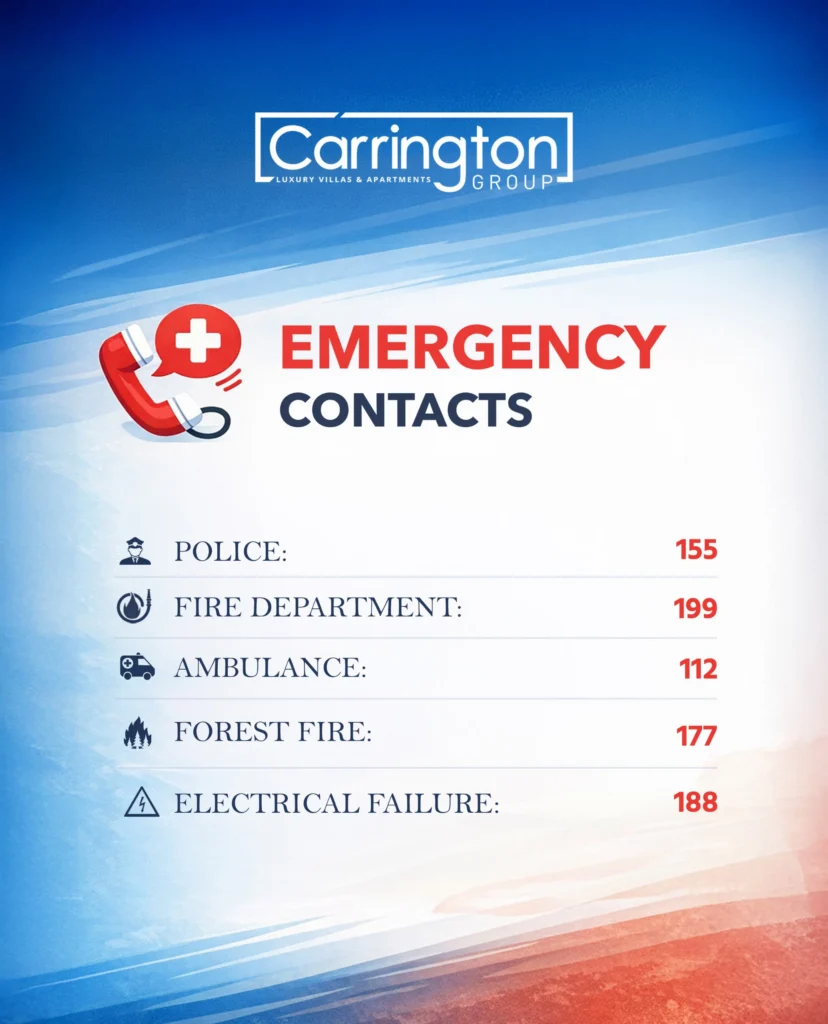
If something goes wrong outside office hours, the system becomes much simpler. For a medical emergency, call 112. That is the emergency ambulance number consistently referenced across North Cyprus guidance and expat resources.
For non-emergency appointments on the public side, the Ministry of Health lists the 1101 appointment line on its official contact page, with published operating hours of Monday to Friday 08:00-17:00 and Saturday 08:00-14:00 as of March 16, 2026.
Day-to-day access usually works through one of three routes:
- public hospital or health center
- private hospital or clinic
- local pharmacy for minor issues and prescription needs
Pharmacies are an important part of everyday healthcare in North Cyprus, especially for minor ailments and urgent out-of-hours needs. New residents should learn how the local on-duty pharmacy rotation works in their area rather than waiting until a late-night problem forces the lesson.
Is healthcare in North Cyprus good enough for long-term living?
For many people, yes. But the honest answer depends on the kind of resident you are.
If you are relatively healthy, comfortable using private clinics for routine needs, and located near Kyrenia or Nicosia, healthcare in North Cyprus is usually practical enough for full-time living. If you are retired and managing a stable condition, it can still work well, but only if you choose your location carefully and set up insurance, medication continuity, and hospital preferences in advance.
If you have a complex ongoing condition that requires highly specialized tertiary care, do not rely on assumptions. Ask direct questions. Which hospital handles your specific specialty? What happens if you need advanced surgery? Does your insurer cover treatment locally, in Turkey, or elsewhere? Calm planning matters more than optimism here.
As of March 16, 2026, the Ministry of Health is also publicly discussing ongoing infrastructure expansion and hospital projects, which suggests a system still improving rather than standing still. That is positive, but it is not a substitute for verifying today’s real access.
Lena, a buyer planning to split her year between North Cyprus and Europe, approached the issue the right way. She did not ask whether healthcare was “good” in the abstract. She asked which hospitals she could reach in 30 minutes, whether her insurer recognized them, and how she would handle repeat medication in winter. That is the right level of seriousness.
Frequently asked questions
Conclusion
Healthcare in North Cyprus is best understood as a practical mixed system. The public side gives the island essential emergency and general hospital coverage. The private side gives many expats the speed, communication, and convenience they want for daily life. The right answer is usually not choosing one over the other. It is knowing when each makes sense.
For buyers, retirees, and long-term residents, healthcare should be treated as part of location strategy, not as an afterthought. A property with a strong coastal setting and long-term value looks even better when the nearest hospital, pharmacy, and emergency route are already part of the plan.
If you are assessing North Cyprus as a place to live or invest, start with our complete North Cyprus guide or living in North Cyprus guide or contact our team to discuss which regions combine lifestyle value with practical year-round living.